

An Orlando park day does not start at the turnstile. It starts in a hotel room off International Drive, in Kissimmee, or in Lake Buena Vista, with a bag on the bed and a morning that already feels warm. You fill a water bottle. You drop in sunscreen. You add a light layer you do not believe you will need, then you walk to a parking tram, a bus stop, or a rental car that has been sitting in Central Florida sun. The tote has to live through that walk before it ever sees a gate.
This guide is about that job: what a park bag actually has to survive here, and which tote family to name when you write us. It is not a ticket page, and it is not a partnership with any park operator. The neighborhoods are the weather. The parks are the walk. For the packing list. Heat, water, rain, parking lot to gate. Read the parking-lot essay. For the searches, read the park-day kit. Tote versus duffel: canvas tote vs weekender duffel.
From the parking lot to the gate
West of downtown, the I-4 corridor is a chain of lots, sidewalks, and shuttle waits. You leave the car. You stand on asphalt that holds the morning. You ride a tram or you walk a covered path that is not as cool as it looks. Then you join a security line, open the bag, and close it again. Only after that do you reach the gate.
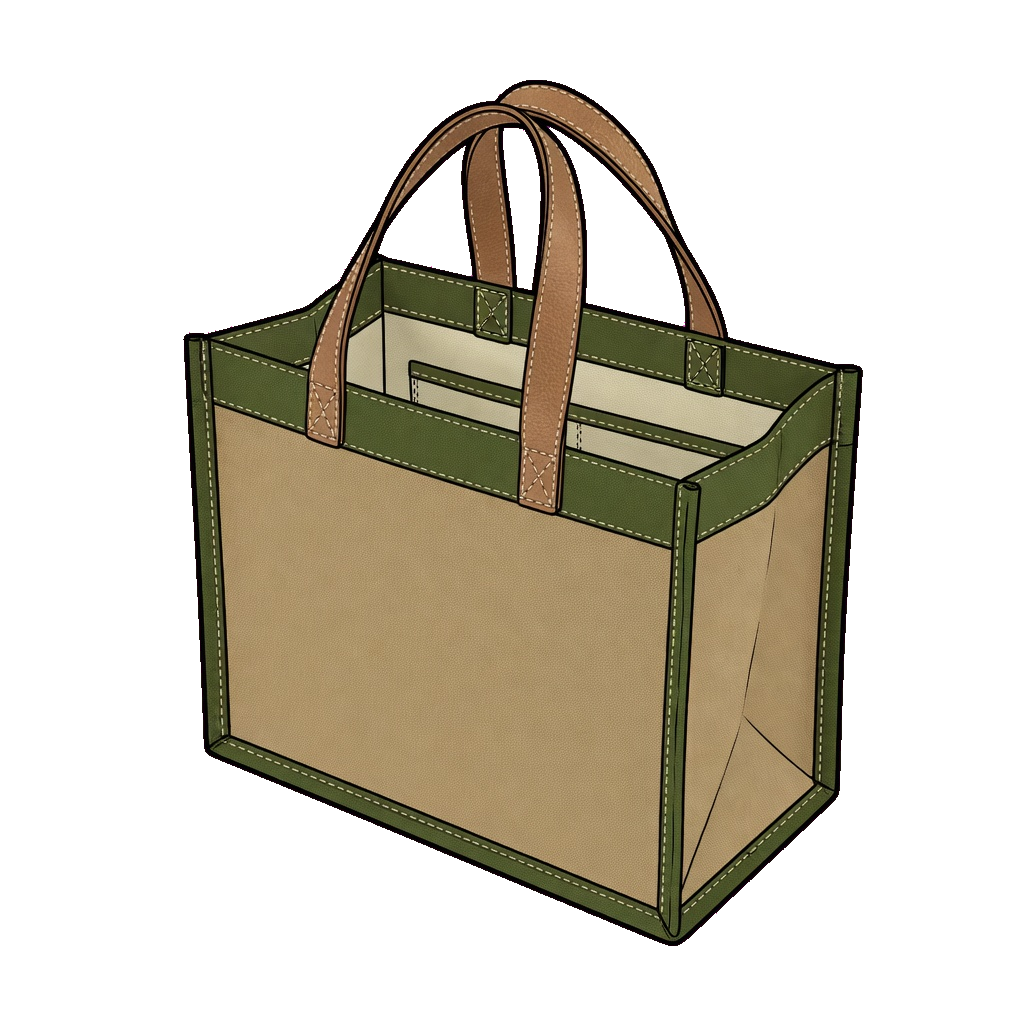
That sequence is why an open tote earns its keep. A wide mouth is faster when someone asks you to show the inside. A structured tote still stands when you set it down to deal with a stroller, a lanyard, or a bottle that wants to roll. A zip tote is slower at the first check and kinder at the last: once you are inside, you stop thinking about the bag every time you sit.
Major parks in this metro screen bags. Operators publish their own size limits and prohibited lists; those change, so read the park you are actually walking into. Across the region the pattern is stable enough to plan around: glass stays out, alcohol stays out, oversized or wheeled bags often stay out, and a refillable water bottle is the one extra that almost everyone is glad they carried. Do not treat this page as a substitute for the posted rules. Treat it as a way to pick a tote that will still make sense after the check.
You will walk. Park days in this town are measured in miles, not in rides. A tote that looks generous in a hotel room becomes a shoulder problem by lunch if it is heavy, shapeless, or missing a place for the bottle. Carry less than the bag can hold. The empty volume is for the afternoon, not for the morning load.
What Central Florida does to a bag
| Day | Bag |
|---|---|
| Park walk | Open tote, bottle pocket |
| Travel split | Duffel in the room |
| Gift haul | Shopper, then the tote stays light |
Orlando’s climate is humid subtropical. At Orlando International Airport, the 1991 to 2020 normals put July’s mean high near 92°F and the mean low near 73°F. June through September is the wet season: June averages a little over eight inches of rain, and July and August each see rain on roughly half the days. Relative humidity in those months sits in the high seventies. The thermometer is only half the story. Combined with moisture, afternoon heat indexes in the low hundreds are ordinary summer news from the National Weather Service office in Melbourne.
Sea-breeze collisions build storms after lunch. On a typical wet-season day the sky is useful in the morning, then stacked by midafternoon. Showers and thunderstorms often arrive between 2 and 5 p.m., last half an hour to an hour and a half, and move on. They are brief, they are loud, and they soak whatever is open. Lightning can pause outdoor queues. The pavement stays hot. The air after the rain is not a relief so much as a steam.
That is the weather a park tote has to live in. Canvas drinks humidity. A pale lining shows the dirt from a lot. A bottle left against a laptop pocket will sweat a ring. Sunscreen in a cheap tube finds the lowest seam. If the tote has no structure, it slumps on a wet table and the contents find the puddle. If it has no closure, the 3 p.m. storm writes the rest of the day.
The same climate is why locals do not treat a park bag as a fashion extra. It is a piece of kit for a long outdoor shift in a metro that runs hot from Lake Nona to Kissimmee. Winter is kinder. January’s mean high is near 72°F, but even then the sun on a lot is real, and a bottle still belongs in a pocket you can reach without unpacking the bag.
Water, pockets, and the afternoon storm
Water is the first test. A refillable bottle is welcome at the parks that matter to most visitors, and many quick-service counters will hand you ice water if you ask. Filling stations exist. None of that helps if the bottle lives at the bottom of a tote under sunscreen and a poncho. Ask for a water-bottle pocket, or a tall side that keeps the bottle upright and separate. Condensation is not optional here. A pocket that stands the bottle up also keeps the rest of the bag drier.
Sunscreen is the second test. You put it on at the hotel and you reapply. A small tube or stick is enough; a family-size bottle is a weight you will resent by the second mile. Keep it in a zip pouch so it cannot season the rest of the bag. Sunglasses, a hat, a portable charger, and a compact poncho or light shell are the rest of the ordinary load. A cooling towel, wrung out at a fountain, is a local habit for a reason.
The afternoon storm is the third test. A zip tote closes when the sky opens over the tram. A structured tote keeps its mouth off the wet concrete if you have to wait. An open canvas tote is still a good park bag if you carry a fold poncho on top and you are willing to duck under cover. Name the closure when you write us. “Open for the gate, zip for the storm” is a real sentence.
Snacks and a light layer fill the leftover space. Outside food rules vary by park; glass does not. Keep food in a bag that will not burst when the tote is squashed against a seat. The layer, a thin long sleeve, not a winter coat, earns its keep in air-conditioned queues and on the bus back to International Drive when you are wet from the rain and the air is still in the eighties.
Neighborhoods, not a park brand
Where you sleep changes the bag more than which park logo is on the map. Lake Buena Vista and the hotels west of I-4 mean short hops, early walks, and a tote that may sit in a room for an hour at midday if you come back to the pool. Kissimmee, south along the tourist spine, often means more time in a car and a bag that has to survive a parked interior before and after the gate. Read the travel guide for that heat. International Drive is the long commercial strip: dinner, a second bag of souvenirs, a shopper that was not the park tote.
Downtown and Lake Nona are not the park belt, but they are Orlando. A tote that works for a park week should still be a city bag on a rest day: water, a layer, whatever you picked up. That is why we talk in families, tote, shopper, duffel, instead of in park names. The tote is the walk. The shopper is the haul home along I-Drive. The duffel stays in the room unless the week splits and you leave town.
If you are staying on I-Drive and doing a park day, do not make the park tote do grocery duty on the way back. A fold shopper packed flat in the hotel drawer is the second bag. If you are in Kissimmee with a car, the park tote still should not live on the seat while you eat. Bring it inside. Central Florida will finish anything you leave in the glass.
What to write us
Name the day and the tote. Say whether you want an open mouth for the gate, a zip for the storm, or a structured body that stands on a table. Say if you need a water-bottle pocket. Say how many people share the bag. One tote for a family is a common, lighter plan than one bag each. Say if the same tote has to ride to dinner on International Drive or if a shopper will do that work.
Look at the catalog families, then write sales@tabaconda.com. If you want the list for an I-Drive, Kissimmee, or Lake Buena Vista morning, the parking-lot essay and the park-day kit are the next two pages. Publisher: Orlando Bag Outlet + Tabaconda LLC.